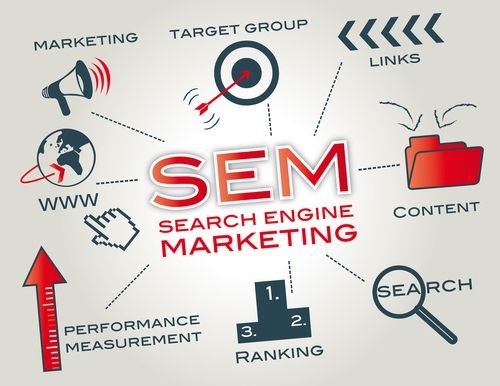
Search Engine Marketing is the paid counterpart to SEO — buying visibility in search results rather than earning it organically. It's most commonly associated with PPC (pay-per-click) advertising, like Google Ads and Microsoft Ads.
Core Components
- Keyword bidding – advertisers bid on search terms; ads appear when users search those terms
- Ad auctions – platforms rank ads using a mix of bid amount and Quality Score (relevance, landing page experience, expected click-through rate)
- Ad formats – search ads (text), shopping ads (product listings with images/price), display ads, and increasingly video/performance max campaigns that run across multiple surfaces automatically
- Landing page optimization – the page a click lands on directly affects conversion rate and Quality Score
- Bid strategies – manual bidding vs. automated/AI-driven bidding (target CPA, target ROAS, maximize conversions)
Note: SEM technically covers both paid and organic search marketing, but in practice today it's used almost interchangeably with paid search advertising — SEO has become its own established discipline.
SEM Today: "Automated Complexity"
- Barrier to entry is low, barrier to excellence is high — launching a campaign has never been easier, but achieving real excellence now requires strong data infrastructure, a steady pipeline of creative assets, and the agility to run across Google, Amazon, and TikTok at once Yotpo
- Ads are moving into AI answers — Google has been testing and expanding placement of search and shopping ads directly within AI Overviews rather than just above/below them
- Automated/AI bidding dominates — Performance Max and similar AI-driven campaign types now handle targeting and placement decisions that used to be manual
- Retail media is surging — “Retailer Search” on platforms like Amazon and Walmart is growing at roughly double the rate of core Google search, making it a channel marketers can’t ignore anymore